Category: Garden Blog Posts

  • How to Grow Microgreens From Seeds at Home

    How to Grow Microgreens From Seeds at Home

    Top view of fully grown micros that are ready to harvest.

    Growing your own microgreens from microgreen seeds at home is easy and takes just a few minutes to get started. You won’t need much space, just enough to lay out the growing trays. After about 10 days, you can enjoy them on salads, sandwiches, in smoothies, or in a variety of other ways.

    Why microgreens? They offer high nutritional value in a small package. They can be spicy, sweet, or neutral depending on the variety you grow. Each variety has a unique flavor. Some of the most common types are broccoli, radish, and basil microgreens.

    Let’s Get Started!

    To get started growing your microgreens you’ll need to gather a few supplies.

    • A shallow tray, about 3-4 inches deep, will provide enough space for them to grow
    • Seed Starting Mix/Soil
    • Microgreen seeds of your choice
    • A spray bottle with water for misting

    My personal favorite blend of microgreen seeds are linked in my Amazon storefront. I recommend picking something you like to eat since that’s the purpose of growing them.

    Planting Your Microgreen Seeds

    Amy Cross standing at her kitchen counter with all the supplies needed to grow microgreens - a shallow tray, potting soil, seeds, a grow light, and a misting spray bottle.

    When it’s time to get started, the first step is filling your shallow tray with about 2 inches of potting mix. After that, you will want to get the soil mix very wet, almost the consistency of a mudpie. It is important to not pack the soil or push it down tightly as this will prevent the roots from being able to grow into the soil. Once the soil is very wet, sprinkle the seeds on top of the soil.

    Since you are growing microgreens, not an entire plant, the seeds can be very close together. After evenly sprinkling the seeds, use a small amount of soil to lightly cover the top of the seeds. Once the seeds are lightly covered, mist the soil with a spray bottle. Place the tray in a sunny windowsill, in direct artificial light, or under a grow light. Continue to use a spray bottle to mist the top of the soil and keep it moist while the seeds are starting to sprout.

    Microgreen seedlings just starting to sprout.

    Eating Your Microgreens

    You will begin to see tiny plants start to germinate from your seeds pretty quickly. I usually start eating my greens after about 10 days. Technically, microgreens are baby plants, so you can choose when you are ready to harvest them.

    When you are ready to eat them use clean kitchen shears or a very sharp knife and trim them at the soil line. If you are able, trimming as you plan to eat them keeps them fresh.

    After cutting, give them a quick vinegar wash for 2 minutes and then a trip in the salad spinner if you have one to try them off. Then you are ready to enjoy your fresh microgreens in whatever you are making.

    If you would rather harvest them all at once, you can do that too. Cut and wash them the same way as above, but let them dry longer and store them in a glass container with a paper towel.

    Side view of Micros in a shallow tray.

    I Have Microgreens, Now What Do I Do With Them?

    Microgreens are a vegetable that is not a part of many folks’ everyday rotation. In an effort to eat a rainbow every day, they can be a good alternative to lettuce. These baby greens are a great option to spruce up a salad, add another layer of flavor to a sandwich, or toss in stir fry. By being able to grow your own at home you have more flexibility on skipping the store and always having some on hand.

    Microgreens vs. Sprouts

    Did you know there is a distinct difference between sprouts and microgreens?

    • Sprouts are eaten in the first few days of germination where microgreens are eaten up to five weeks after planting.
    • Microgreens are cut and you are eating the leaves and stems, while sprouts are usually grown in water and you are consuming the seed.
    • Additionally, microgreens last longer in the fridge.

    Now that you know how to grow microgreens, with these simple steps, will you be giving them a try? If not, and you’d rather stick to lettuce, check out my lettuce blog post below:

    How to keep lettuce fresh for weeks

    How to Keep Lettuce Fresh for Weeks

    And for toppings on your microgreens or traditional salad, check out this blog post:

    Amy Cross in her kitchen with freshly washed produce in glass mason jars.

    How to Keep Salad Toppings Fresh for Weeks

    This post may contain affiliate links. This means if you purchase through my links, I receive a small commission at no cost to you. For more information, please read my Disclaimer

  • How to Build a Potato Box and Grow Your Own Potatoes

    How to Build a Potato Box and Grow Your Own Potatoes

    Mike holding a couple of power tools in the yard

    With food prices on the rise, being able to produce your own food and not rely on the grocery store is beneficial. Now is a great time to try growing a few things in your own garden or raised bed and potatoes are so easy! Whether you have a small garden or a lot of space to work with, everyone can grow potatoes in a potato box.

    We have plenty of square feet but the chickens need all the room! So, we grow our potatoes vertically to save on space. Potato boxes allow you to grow potatoes with minimal space and still produce high yields.

    Mike built me a few potato boxes last year, so he’s going to explain that process below if you’d like to build some for your garden!

    Close up of a Potato Box with full grown potato plant growing inside.

    Save Square Feet, Grow Vertically in a Potato Box!

    Mike reaching into potato box near a pail

    For a few years we’ve talked about building new potato boxes. Last year I decided to use up some wood from our woodpile and build Amy some new potato boxes. It’s a great alternative to planting in a traditional garden bed. I used supplies I had on hand around the house, but you can find a full supply list at the end of this post.

    This is a super easy project. If you are project challenged don’t be afraid to give this one a try for a beautiful addition to your home garden.

    I’m using cedar because that is what I have on hand. I also prefer cedar because it lasts longer. Amy likes it because bugs don’t like cedar. Let’s face it, anything that deters bugs is helpful.

    Usually, we plant potatoes around St. Patrick’s Day. Ideally you want to plant your potatoes 2-4 weeks before the last frost date.

    If you’re a visual person and would rather watch a video, feel free to head on over to our YouTube channel and watch how I built the potato boxes.

    two new potato boxes in the yard

    Tips for Building a Potato Box

    Did you know Home Depot can cut boards to your specified lengths? You have to buy your boards there, they have to be staffed enough, and you may have to wait a bit. So, if you need them to cut your boards for you, I recommend shopping during a slower time of the day/week.

    I am using a drill and screws because I have a drill available to me. But, if you do not have a drill, this project can be completed with a hammer and nails. Adjust the supply list accordingly from screws to nails when using a hammer. Be sure to measure so you purchase nails long enough to go through the board and securely attach it to the post. If you are in need of a drill I have my favorite drill listed in our Amazon Storefront.

    Growing Potatoes

    photo-of-amy's-whole-urban-homestead-backyard-garden-with-potoato-boxes-raised-beds-and-trellis

    Amy and I usually head over to the local greenhouse and pick up a couple varieties of potato starts. I usually add in a couple of organic seed potatoes that have started to grow from our stash of potatoes at home as well. I recommend growing the potatoes you like to eat. When growing different types of potatoes, you might consider growing them separately; that way you know which box has what type of potato in it. Keep it simple and don’t overthink it.

    When it comes to growing conditions, potatoes grow best in sandy, well-drained soil. You can run a soil test to see if you have good soil or need to add amendments. They also grow best in full sun. The amount of water will vary depending on your location and the timing of when you plant.

    The number of potatoes you can plant in each potato box will be determined by the potato variety and size of the plant. You do not want to inhibit plant growth by having too many seed pieces in one area. It’s best to follow the planting instructions on the package of potato starts for each variety you are planting.

    Amy has a YouTube video about how to store potatoes, you can watch that below.

    Have Fun!

    Gardening should be exciting and enjoyable. I hope you find my raised bed potato box video and instructions helpful. Once you grow your own potatoes, you should try making Amy’s Zuppa Toscana soup. It’s one of my favorites, and I’m sure you’ll love it just as much.

    [wprm-recipe-roundup-item id=”10051″]

    Potato Box Supply List

    Potato boxes are approximately 24" x 24" x 32"

    • Tape Measure
    • Pencil
    • Saw or Circular Saw
    • Drill & Screws

    Shopping List for 2 Potato Boxes

    • 3 Cedar Posts, (2" x 4" x 8')
    • 14 Cedar Fence boards, (⅝" x 5½" x 6')
    • 3 Cedar Fence boards, (⅝" x 3½" x 6')
    • 160 Wood Screws, (1⅝" (1 or 2 lbs.))

    CUTTING INSTRUCTIONS:

    Cut 2" x 4" x 8' Cedar Posts:

    1. Cut at 32 inches.  This will give you three 32" pieces per 8' board.

      (A total of 8 pieces are needed, 4 for each box.  There will be one extra piece, 32" long.)

    Cut ⅝" x 5½" x 6' Cedar Fence Boards:

    1. Cut at 24".  This will give you three 24"pieces per 6' board.

      (A total of 40 boards are needed, 20 for each box.  There will be two, 24" extra pieces left.)

    Cut ⅝" x 3½" x 6' Cedar Fence Boards:

    1. Cut at 24".  This will give you three 24" pieces per 6' board.

      (A total of 8 boards are needed, 4 for each box.  There will be one 24" extra piece left over.)

    ASSEMBLY INSTRUCTIONS:

    1. For assembly instructions, please watch the YouTube video posted below.

    • The 5/8″ x 3-1/2″ x 6′ cedar fence board is needed because 6 for the 5-1/2″ fence boards do not fit within 32 inches. 5.5 x 5 = 33,  technically (5.5 x 5) + 3.5 = 31. But there is variation in the wood, there can be small gaps when you add the boards at each layer.
    • I use 3 screws at each connection for the top row and bottom row of boards.  I use 1 screw at each connection. This adds up to 20 screws per side of a box.

    This post may contain affiliate links. This means if you purchase through my links, I receive a small commission at no cost to you. For more information, please read my Disclaimer

  • Planting a Seed

    Planting a Seed

    DISCLOSURE: This post may contain affiliate links. Which means if you make a purchase through my links, I receive a small commission at no cost to you. For more information, please read my Disclaimer .

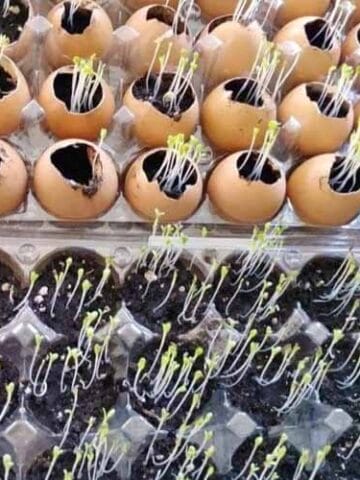
    planting seeds inside of soil and cups or eggshells

    Planting seeds can be used as a sign of hope, of something new.

    I live in the Pacific Northwest, Seattle Area and when they say it rains for months on end, it is true. There are days I crave a blue sky, almost anytime between October and April.

    You don’t realize how much you crave a blue sky till you get one and you see everyone taking pictures of the mountain. In the Seattle area the mountain we talk about is Mt. Rainier. The pictures on these days can be magnificent.

    All the other days, the months and months of the gray ones, used to really get to me until I started to do things to look forward to spring. Preparing for spring helps end my seasonal depression.

    Hope for the Future

    One of those things that really helps me find hope in the new season is planting seeds. I have a pretty small house so I can’t plant all of the seeds for my entire garden and care for them until Mother’s Day when they are finally ready to go in the ground.

    Seed starting is a way to watch the growth and know that garden season is among us. There is a hope for a future.

    using a tablecloth, plastic bucket, measuring cups, soil and seeds, kids get a fun activity to learn about how their food grows and how to plant seeds

    Where Food Comes From

    It is no exaggeration that I love littles. I went to college for an Early Childhood Development Degree and spent years with them in my home being able to make a difference in their lives.

    One of my favorite springtime activities is to put a tablecloth or a big sheet on the floor, grab a tub of dirt, grab the littles, and plant seeds together. This was often done on our kitchen floor instead of outside due to the rain.

    Teaching them where food comes from and having them play an active role in planting and daily watering is important to me.

    Do you have a memory similar to this with your littles?

    You don’t have to have a large scale backyard garden to be able to teach your children these things. The idea of learning that seeds get planted in dirt and then grow into food instead of thinking that the food always just comes from the store.

    Starting a Garden

    basil seed starts inside of soil and eggshells

    Are you wanting to start seeds?

    If you are wanting to plant a garden and start from seeds there is a great app called Seed Time. I had signed up for the free part of the program and it is so helpful entering in what you want to plant, when you should, when to move it outside etc.

    The Rooted Life: Cultivating Health and Wholeness Through Growing Your Own Food by Justin Rhodes is a great resource. This book helps you from seeds to recipes. Take a look. Let me know what you think.

    Are you looking around and realize you have a small space to grow something? Take a look at the Homestead Anywhere ebook for some great ideas to help you with your next growing project.

    Sharing Hope

    it's always fun to visit Grandma at her place; here she is at the door

    During the start of the pandemic we were having such a hard time trying to keep our grandma safe. She is in her 90’s, lonely, and scared of being by herself.

    We would visit her and stand outside talking to her through the glass. On one of our visits we brought her a tray of seeds, knowing full well she wouldn’t be eating anything green. She is almost like a little kid wanting cookies instead of veggies.

    That spring Grandma grew her tray of veggie starts and she was so proud of them. It gave her something new to talk about during our daily calls instead of the news that she was watching.

    It gave her hope for the future.

    Remembering Our Past, Enjoying Our Victories

    During this time of uncertainty, Grandma talked more about growing up right after the depression and through WWII. I had grown up on a farm and was used to everyone just having a garden.

    Did you grow up having a garden?

    Listening to Grandma talk more about the victory gardens from her early years was so interesting to me.  There is so much that we can learn when we get back to our roots and learn from our past, giving hope to the future.

    victory garden diagram

    Playing In the Dirt

    There is something calming and healing about getting your hands in the dirt and watching something grow. The nurturing of watering and caring for it moves you outside of your own thoughts and into worrying about something else.

    materials and setup needed for seed starts

    When the idea of the seed starting post first came to me I thought it would go in one direction, but as I sit here to write I went a whole different direction. A direction I felt compelled to go.

    I thought I would talk about different plants to plant and maybe when. When I thought about this it was overwhelming as so many of you are in different places, different zones. Frankly, there are some great pages out there to help you with the specifics of your area which is beyond my expertise.

    For the US this is a great tool to figure out what your planting zone is.

    This link also has Canada and other countries around the world.

    Really what was on my heart to share with you today is that planting seeds may be more than just the seeds in the ground. Faith, hope and love are seeds to be planted too.

    Faith and Hope or tomatoes and peas, all seeds are important!

    What seeds are you planting this spring?