Category: Fermenting Blog Posts

  • The Best Homemade Fermented Salsa Recipe

    The Best Homemade Fermented Salsa Recipe

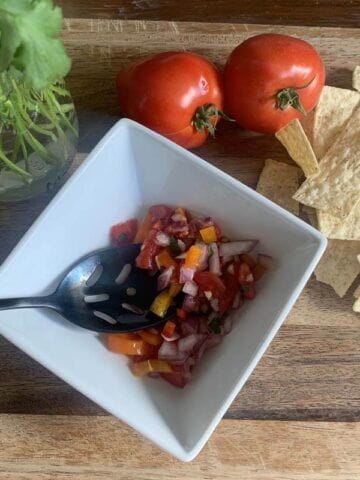
    fresh cilantro and tomatoes with corn chips and salsa in a white bowl

    Have you been harvesting lots of tomatoes from your garden and looking for recipes to make to enjoy them? Making fermented salsa is a great way to use up the tomatoes and have a delicious snack on hand for your family to enjoy all winter long. Additionally, many people enjoy fermented foods for their various health benefits.

    This fermented salsa will last in your fridge for several months after it ferments on your counter for three days. You can also put some of it in a jar and eat it right away if you don’t want to wait to enjoy the delicious flavor!

    Use Ingredients in Your Fridge

    variety of heirloom tomatoes in an oval tray lined with a blue towel

    As I created this recipe for fermented salsa, I was able to use up some of the ingredients that I already had at home in my fridge. This is another way to prevent food waste and save money. You can substitute for different types of onions or peppers, but make sure that you are using real salt in this recipe for the best flavor. Take an inventory of what you have before you go shopping and use up that produce first.

    How to Wash Vegetables

    The tomatoes and peppers should be washed when you bring them home from the store or in from your garden. I wash them in a large glass bowl with 10 cups of water and 1/4 cup 5% distilled white vinegar. They should be washed for two minutes and then allowed to dry. I store garden tomatoes on the counter and peppers in the fridge.

    zero waste produce guide cover

    If you want to learn more about washing and storing produce, check out my bestselling book the Zero Waste Produce Guide. It has directions for 75 produce items as well as inspiration for over 40 recipes as well as other helpful tips. You can get your copy here.

    Tip: When you are making your salsa, one important thing is that you have to make sure the solids stay underneath the liquid. If they float to the top, they can mold. You can use a larger piece of onion or pepper at the top to keep the items down. Something that I’ve found that is even easier is a glass weight from amazon.

    Easy, Delicious, Fermented Salsa

    Use your fresh tomatoes in this delicious recipe that will provide you salsa to enjoy all winter!

    • Knife
    • Cutting Board
    • Large bowl
    • Quart Jar with lid and ring
    • Fermentation Weight
    • Canning Funnel
    • Ladle
    • Fermenting Lid
    • Latex food grade gloves
    • 2 c. Tomatoes – (about 4 large tomatoes)
    • 1 Bell Pepper
    • 1 Jalapeno
    • ½ Onion ((yellow or red))
    • ½ Lemon or Lime
    • 2 cloves Garlic
    • ¼ c. Fresh Cilantro
    • 2 tsp. Sea Salt or Pink Himalayan ((do not use salt with Iodine))
    1. Chop all ingredients into small pieces and add them to the large bowl.

    2. When you are finished cutting the tomatoes, carefully pour the tomatoes and all of the juice into the large bowl.

      *All ingredients should be covered by the liquid by using a fermentation weight or large vegetable.

    3. Add Lemon/Lime juice, Garlic, Cilantro, and Salt to the bowl.

      Mix all ingredients together and ladle into quart size mason jar using a canning funnel.

    4. After all ingredients are added to the jar and below the liquid line, add the fermenting lid or canning lid loosely to the jar.

      Place the jar in a bowl to keep your counter clean.

    5. Leave the jar sit on your counter for three (3) days to allow for fermentation. If it is summertime and very hot, you may only need two (2) days.

      *If using a canning lid, release the gas bubbles each day.

    6. After three (3) days, the salsa will be ready to move into the fridge. (Two days if it is very hot.)

      Remove the fermentation weight and replace the fermentation lid with a metal canning lid.

      It will last for several months in the fridge so you can enjoy fresh salsa all winter long!

    • *Make sure that you keep all of the ingredients under the liquid using the glass food weight or a large vegetable (pepper or onion) to keep the salsa mix in the liquid.
    • *If you are using a canning lid instead of a fermenting lid, it is very important to release the gas bubbles each day while the jar is sitting on your counter.
    • The Cross Legacy provides estimated nutrition information for convenience and as a courtesy only. Nutrition data is collected from the USDA database via Spoonacular, when available. If not available, nutrition information is pulled from other online calculators. Ingredients can vary and The Cross Legacy can make no guarantees to the accuracy of this information.
    Appetizer
    Mexican
    fermented salsa, salsa, tomatoes

    Make It a Meal

    [wprm-recipe-roundup-item id=”11245″]
    [wprm-recipe-roundup-item id=”345″]

    DISCLOSURE: This post may contain affiliate links. Which means if you make a purchase through my links, I receive a small commission at no cost to you. For more information, please read my Disclaimer.

  • Quick and Easy Crunchy Dill Pickles

    Quick and Easy Crunchy Dill Pickles

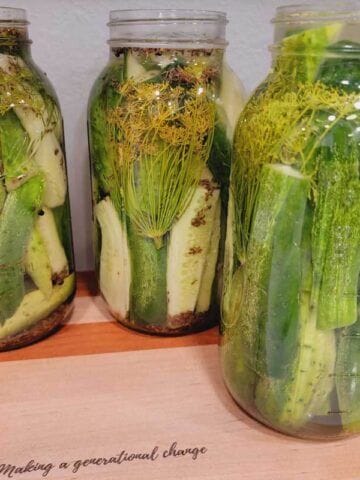
    3 jars of finished crunchy dill pickles in jars sitting on a wooden cutting board

    There’s nothing that compliments a fresh made sandwich quite like a crunchy dill pickle. Or a charcuterie board with a beautiful display of olives, crackers, and an array of sliced meats and cheeses. Have you ever wanted to make pickles yourself? Well, today I’m going to share my Quick and Easy Crunchy Dill Pickles recipe with you and you don’t even need an expensive canner to make them! They are pickled while they rest in the brine in your refrigerator. This process is so simple and keeps them good and crunchy for months.

    If you have littles in your family and are looking for a fun recipe to make with them, this is a great one to try. Cooking and baking together isn’t just a fun activity, it’s also a great way to make memories together and teach important life skills. Plus, everyone gets to enjoy the fruits of their labor once the pickles are ready in a few days.

    In this blog post, I’ll be teaching you the entire process of making this pickle recipe with tips and videos!

    Picking the Right Cucumber

    close up of pickling cucumbers with ingredients blurred in the background

    Cucumber Skin

    It’s no secret that pickles are made from cucumbers. But did you know that you can’t just use any old cucumber to make pickles? That’s right, choosing the right cucumber will make all the difference when making pickles. Why? Because regular cucumbers have thick skin, while cucumbers grown for making pickles have thin skin.

    The thin skin allows the brine to be absorbed and aids in the pickling process. In addition to picking cucumbers with thin skin, you want them to be firm with dry flesh so that they stay crunchy after a long brine.

    Cucumber Size

    The size of the cucumber also matters. Cucumbers grown for pickling are smaller so they easily fit into the jars. When shopping for your pickling cucumbers, keep in mind what size jar(s) you will be using and choose your cucumbers accordingly.

    sliced pickles soaking in a bowl of water

    If you garden and plan ahead, you can find pickling cucumbers to grow and pickle as you harvest. Cucumbers are a vining plant and tend to be an easy produce item to grow. When planning to grow pickling cucumbers, start seeds indoors four weeks before the last frost date.  If you are limited on space, or want to keep the fruit off the ground, you can grow the cucumbers vertically. Mike and I use hog panels to grow our cucumbers.

    pickling cucumbers in a white bowl with fresh dill sprigs

    Preparing Your Cucumbers

    The best way to keep your pickles crisp is by taking an extra moment to remove the blossom from the end of the cucumber. By adding this extra cut, you have a crisper pickle. Other ways to ensure a crisp pickle is by adding grape leaves to your jar. I tend to cut off both ends of the cucumber as I quickly process them.

    no canner needed dill pickles pickling in the refrigerator


    Quick and Easy Crunchy Dill Pickles

    I love making these Quick and Easy Crunchy Dill Pickles as I harvest my pickling cucumbers from my garden. But you can buy pickling cucumbers from a produce stand or farmer’s market and make as many jars as you wish. They are pickled and stored in your refrigerator – no canner required!

    • Heavy bottom sauce pan
    • Quart Jar with lid and ring
    • Canning Funnel
    • 1 c. Water
    • 1 c. Vinegar
    • 3 tsp. Canning Salt or Sea Salt ((must be Iodine free salt))
    • ½ tsp. Sugar
    • 6 Cucumbers, (cut lengthwise into spears)
    • 3 sprigs Fresh Dill, (or 1 T. dried dill)
    • 3 cloves Garlic, (peeled and crushed)
    • 1 tsp. Mustard seeds
    • 1 tsp. Black peppercorns
    • 1 Grape leaf, (optional)
    1. Place water, vinegar, sugar and salt in a heavy bottom pan to create the brine.

    2. Warm on Medium-Low heat until the sugar and salt dissolve.

    3. In a clean quart jar, add the remaining ingredients.

    4. Using a canning funnel, pour the brine into the jar until the pickles are covered.

    5. Cover the jar with the canning lid and ring.

    6. Store in the refrigerator for seven (7) days to allow it to pickle.

    7. After seven (7) days, enjoy your delicious pickles.

    • These Crunchy Dill Pickles are good for a few months. The pickling flavor will get stronger the longer they are stored in brine.
    • Adding a grape leaf to the jar is optional, but will keep your pickles crunchier for longer.

    The Cross Legacy provides estimated nutrition information for convenience and as a courtesy only. Nutrition data is collected from the USDA database via Spoonacular, when available. If not available, nutrition information is pulled from other online calculators. Ingredients can vary and The Cross Legacy can make no guarantees to the accuracy of this information.

    Snack
    American
    Crunchy, Dill, Garlic, Pickles

    Other Pickling Projects

    This recipe can be used for a variety of other vegetables such as asparagus, carrots, cauliflower, green beans, etc. Whatever extra produce you may have either from the garden or from the produce stand, give it a try!

    Pro Tip: Since this recipe is both pickled and stored in your refrigerator, keep in mind how much refrigerator space you have available. I may not have looked before I started the process a time or two and made a few too many jars myself. This is why I’ve created this recipe for only one quart size jar. If you have the space to make more than one quart, you can easily adjust the recipe to suit your needs using the adjustment calculator. You can also add more or less garlic and dill depending on your preferences.

    If you’re interested in learning about my other canning recipes, I have a few blog posts and videos available for you; however, these recipes do use either a pressure canner or a water bath canner. Here are just two of my most popular:

    Or you can watch the videos.

    https://youtu.be/aNjMmq11kcIhttps://youtu.be/s0tS_557SFQ

    Canning your own food is one of many great ways to help build food security in your home. I invite you to join my online course, The Grocery Solution, Stop Throwing Your Grocery Budget Away! Building a good working pantry is another great way to battle the ever-rising food prices in our current economic climate.

    Have you made pickles before? If so, what kind have you made? Are you going to try my Crunchy Dill Pickle recipe? Leave a comment below and let me know, I’d love to hear what you’re making or answer any questions you have.

    DISCLOSURE: This post may contain affiliate links. Which means if you make a purchase through my links, I receive a small commission at no cost to you. For more information, please read my Disclaimer.

  • How to Make Homemade Sauerkraut

    How to Make Homemade Sauerkraut

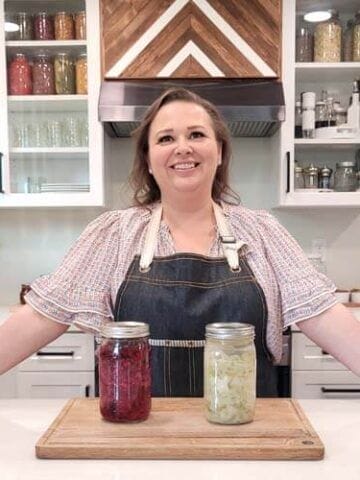
    red-and-white-homemade-sauerkraut-in-mason-jars-sitting-on-a-wooden-cutting-board

    Many of you have requested information on how to make homemade sauerkraut. The well-known, popular German dish has taken many households by storm. Some people just love the sour flavor as a topping on a hot dog or mashed potatoes, while others love to eat it for its fermented health benefits. As a fermented food, it has probiotics in it. That is a little beyond what I want to talk about today. Today I am here to teach you how to make it.

    In this blog post will cover:

    1. Why Make Your Own Sauerkraut? 
    2. What You Will Need to Make Your Own Sauerkraut
    3. The Recipe
    4. Making Your Kraut Your Own

    Why Make Your Own Sauerkraut?

    There are a host of reasons why you would want to make your own sauerkraut. It’s a great low-calorie superfood with a long shelf life. Making your own kraut is a cost-effective way to save your cabbage, and homemade sauerkraut is considered more nutritious than store-bought due to the processing. You have been asking me how to make it, so today I am sharing my tips with you. I hope this helps you on your journey to making your own!

    cut-cabbage-red

    What You Will Need to Make Your Own Sauerkraut

    So, Let’s Get Started. The sooner we get started the sooner we can eat it! The fermentation process takes at least a few days, so planning ahead is key.

    You are going to need the following:

    INGREDIENTS:

    • Cabbage: red or green (Set aside half a cabbage leaf for the fermentation process)
    • Sea Salt (If you use Himalayan Salt, it can turn your cabbage pink and may look moldy when it isn’t. I strongly suggest using sea salt.)
    • 5% Distilled White Vinegar (for cleaning your cabbage if not already washed)

    SUPPLIES:

    • Large Bowl 
    • Cutting Board
    • Knife
    • Glass Jars with Lids
    • Sauerkraut Pounder or Wooden Spoon
    • Fermenting Weights to hold the cabbage below the liquid

    The Recipe

    Homemade Sauerkraut

    Making your own sauerkraut is a cost effective way to save your cabbage, and homemade sauerkraut is considered more nutritious than store-bought due to the processing.

    • Large bowl
    • Cutting Board
    • Knife
    • Pint Size Canning Jars with Lids and Rings
    • Sauerkraut Pounder or Wooden Spoon
    • Fermenting Weights
    • 3 ½ lb. Cabbage, (Red or Green)
    • 2 T. Sea Salt per 3 ½ pounds of Cabbage

    WASH YOUR CABBAGE:

    1. Before cutting the cabbage, reserve an outer leaf.

    2. Check your receipt or weigh your cabbage and make a note of its weight.

    3. Cut the cabbage into quarters.

      I cut mine into quarters because it fits in my bowl better.

    4. Wash your cabbage in the vinegar wash for 2 minutes.

      ¼ cup distilled white vinegar to 10 cups of cool water in a large bowl for 2 minutes and rinse.

    PREPARE YOUR CABBAGE:

    1. Shred, or cut the cabbage into bit size pieces.

      I typically cut mine into thin pieces with a knife.

    2. Transfer the cut cabbage into a large bowl and sprinkle with sea salt.

      2 T. for every 3 ½ lbs. of cabbage.

    3. Once all the sea salt has been added, squeeze the cabbage with your hands for a few minutes to help release some of the liquid into the bowl.

    4. Let the cabbage sit in the bowl for 30 to 60 minutes.

    5. Pack the cut cabbage into a glass jar large enough to hold all of the cabbage and all of its liquid.

    6. Using a sauerkraut pounder* or wooden spoon, press and squeeze the cabbage in the jar to remove any air bubbles.

      Be aggressive with this and push hard.

    7. Pour all the juice from the bowl into the glass jar being sure to cover the cabbage.

    8. Take the cabbage leaf you set aside and cut it in half.

    9. Take half a cabbage leaf and place it in the glass jar. You want to cover the top of the cut cabbage. Push to get all the cut cabbage under the liquid.

    10. Place a fermentation weight on top of the half leaf of cabbage.

    11. Place the lid on the glass jar and put the glass jar on a plate or bowl.

      The bowl/plate will catch any liquids escaping during the fermentation process.

    ALLOW CABBAGE TO FERMENT:

    1. Leave the glass jar on the counter for three days.

      The sealed jar will begin the fermentation process on your counter.

    2. Uncover the jar daily to release any build up of gasses.

    3. After 72 hours, remove the lid, fermentation weight, and cabbage leaf.

    STORE YOUR SAUERKRAUT:

    1. Replace the lid and store in your fridge for up to one year. You may want to mark the date on the jar with a Sharpie marker.

    Here are a couple of tips to help get the most out of your jar of sauerkraut.

    • Keep the liquid above the cut cabbage. This will help keep the mold away if the liquid is covering the cabbage. 
    • Use a clean serving fork or spoon to grab your kraut out of the jar keeping extra food from falling into the jar and contaminating the brine. 
    • When you are done dishing out your tasty kraut, put the lid back on to minimize the risk of anything unwanted getting into the jar. 
    • Place your kraut back in the fridge and enjoy again later!

    The Cross Legacy provides estimated nutrition information for convenience and as a courtesy only. Nutrition data is collected from the USDA database via Spoonacular, when available. If not available, nutrition information is pulled from other online calculators. Ingredients can vary and The Cross Legacy can make no guarantees to the accuracy of this information.

    Side Dish
    German
    Cabbage, Sauerkraut, Sea Salt


    two-pint-size-jars-of-sauerkraut-sitting-on-a-wooden-cutting-board

    Making Your Kraut Your Own

    If you want to spice up your homemade sauerkraut, you can make it as unique as you are. That is one of the reasons I love to make my own food. Typically, I keep my canning or fermenting items as a single food, but you can change up your kraut and make it yours by adding fruits or vegetables to it. I make a red cabbage and onion sauerkraut that is rather tasty! Root vegetables like beets and carrots work well and hold up to the fermentation process. Apples and pears also make a great addition and add unique flavor to your homemade sauerkraut.

    At my house we use sauerkraut on hotdogs, Reuben sandwiches, with pulled pork, or just whenever. Are you planning to make some homemade sauerkraut this season? What is your favorite way to eat sauerkraut? Let me know by commenting below.

    DISCLOSURE: This post may contain affiliate links. Which means if you make a purchase through my links, I receive a small commission at no cost to you. For more information, please read my Disclaimer.

  • Fire Cider Recipe, Prepare for Winter Wellness!

    Fire Cider Recipe, Prepare for Winter Wellness!

    jar-of-firecider-ingredients

    Throughout the fall and winter months a staple in our home is Fire Cider. Fire Cider is a drink that is made from a combination of fruits, vegetables, and herbs that is left to soak for several weeks. The tonic (liquid) is removed and can be consumed.

    Shot of Fire Cider and Finished Product

    Why Should I Make Fire Cider?

    In our home, we take a shot of the fire cider a day and if we feel something coming on, we will drink even more. We do this in addition to elderberry syrup in order to try and stay healthy in these winter months.

    The full recipe is below, but the power in this drink comes from the ingredients that are packed with antioxidants and vitamins that our body needs. There are so many positive health properties from things like ginger, turmeric, and cinnamon which are included in this recipe. Oftentimes those might not make it into your daily diet, so having it all in a drink that is easy to consume allows your body to get those critical nutrients it needs to function at its best.

    Apple Cider Vinegar Is Key

    The main liquid in the recipe is apple cider vinegar so it does have a strong flavor even after it is infused with all of the other ingredients. If you haven’t looked up the health benefits of Apple Cider Vinegar, you are missing out!

    The jar will look beautiful sitting out on your counter for a few weeks and once it is finished, you will want to use the apple cider vinegar bottles to pour the finished product back into. This will allow for easy storage throughout the winter months as you consume your Fire Cider.

    Pouring Apple Cider Vinegar into gallon jar
    FC Completed Product

    Fire Cider Tonic

    A homemade tonic that will help keep you and your family healthy through the winter months.

    • Cutting Board
    • Knife
    • Gallon-size jar
    • Jars for storing tonic
    • Canning Funnel
    • 2 Oranges, (cut into quarters (keep the peels on))
    • 2 Lemons, (cut into quarters (keep the peels on))
    • 2 Red onions, (sliced)
    • 1 White onion, (sliced)
    • 2 Jalapenos, (with seeds, sliced into discs)
    • 7 oz. Ginger root, (peeled and sliced into discs)
    • 2 oz. Turmeric root, (peeled and sliced into discs)
    • 7 oz. Horseradish root, (peeled and sliced into discs)
    • 2 Heads of garlic, (crushed)
    • 4 sprigs Fresh rosemary
    • 3-4 Ceylon cinnamon sticks
    • 4 Star anise
    • 4 Whole rose hips
    • 2 32 oz. Bottles of Apple Cider Vinegar with The Mother ()
    • 2-3 T. Raw, local honey

    PREPARE FIRE CIDER:

    1. Slice citrus into quarters.

    2. Slice onions, jalapenos, and roots into thin slices.

    3. Lay all ingredients except for citrus and Apple Cider Vinegar into the bottom of the jar.

      It is best to put the spices and honey in the middle of everything so they don't float up to the top.

      Press down to pack all the ingredients together.

    4. Add the citrus quarters to the top and add in the Apple Cider Vinegar until it reaches the top and covers all the ingredients.

      (I keep my Apple Cider Vinegar bottles, clean them out and use a funnel to pour the strained Fire Cider back into them once fermentation is complete.)

    ALLOW TO FERMENT:

    1. Set in a dark place, at room temperature for 4-6 weeks.

    2. Check every few days for bubbles and shake to dislodge.

    FERMENTATION COMPLETE, TRANSFER TO JARS:

    1. After 4-6 weeks, strain and transfer tonic to storage jars.

    2. Label and date jars.

    3. Store in a dark place at room temp for up to one year.

    • I keep the citrus on top so that the smaller bits do not rise to the top and get moldy and gunky. 
    • I reuse the Apple Cider Vinegar jars to store the tonic in. 
    • In my picture, the ingredients are layered. This is unnecessary, however I find it more aesthetically pleasing to look at when it is layered.

    The Cross Legacy provides estimated nutrition information for convenience and as a courtesy only. Nutrition data is collected from the USDA database via Spoonacular, when available. If not available, nutrition information is pulled from other online calculators. Ingredients can vary and The Cross Legacy can make no guarantees to the accuracy of this information.

    Homesteading
    American
    Fire Cider, Firecider, Homesteading, Tonic

    If you made Fire Cider, did your garlic turn blue or green? If it did, that’s nothing to worry about. You can learn more about how and why here. Have you made Fire Cider a part of your daily routine? We’d love to hear in the comments how you enjoy it or if you have any twists to your recipe!

    This post may contain affiliate links. This means if you purchase through my links, I receive a small commission at no cost to you. For more information, please read my Disclaimer